
The Feet as Our Foundation
Do you have foot pain, knee pain, back pain, or pain elsewhere in the body? Foot Yoga might provide you with some relief. How we use our feet is the foundation for how we stand and move. It’s known that problems with the feet, such as flat feet or plantar fasciitis can often show up as back pain, and those with flat feet tend to have misalignment of the knees, hips and low back. A strong base of support from the feet can help to support a healthy back and overall posture.
The fascia of the feet connects to major muscles and other connective tissue that lead all the way to the tongue, known as the “Deep Front Line”. What is fascia? The fascia system forms a continuous tensional network of connective tissue throughout the entire human body and encases every muscle, organ, bone, nerve, artery and vein and helps suspend them all within the case of our skin, like a spider web.
When fascia is healthy, force is transmitted through the body with ease, fluidity, and vitality. Healthy fascia is highly elastic and resilient and provides a high level of stability during dynamic loading, which in turn provides for a high degree of injury prevention. (1)
However, when fascia health is compromised, this will result in a loss of elasticity and resilience, and injury to the body occurs more easily. With an injury or excessive strain, it is the fascia that often adapts to stabilize the local area by shortening, thickening, and adhering to neighboring structures in the body. This will affect the whole structure of the body and often results in fatigue, misalignment, discomfort, and restriction of movement. (1) And, when we look at the “Deep Front Line”, we can start to release and hydrate the fascia from the “root” of our foundation, the feet.
(1) Ajna Yoga Center – Yoga Therapy Training Manual – Tensegrity Repair and Fascia
Yoga for Feet
A 5 – week series providing love and kindness to our feet.
In this 5 – week program we will join (virtually or in person) weekly for a 90-minute session to focus on range of motion, releasing tensions, strengthening, and relaxing the muscles and connective tissue of the feet, legs, and core muscles that support both stability and balance.
We will explore the anatomy of the feet, legs, and facial connections in these areas, and common conditions of the feet that can lead to not only foot pain but pain in all areas of the body. Each week we will explore movements and practices for the feet, ankles, legs, hips, and core to help increase stability and balance as we strengthen and connect to our stance. This series may support those recovering from injury, living with foot pain, chronic pain elsewhere, fallen arches, or other conditions of the feet.
What you will learn:
- Anatomy of the feet and legs and how they support the rest of the body
- Different conditions of the feet and how to support symptoms and recovery
- Facial connection of foot to pelvis and how this can translate into other areas of the body
- Postural awareness including resting posture in both standing and sitting, GAIT, and how this translates in the body
- Ways to release tensions, hydrate fascia, and strengthen key muscle groups that support the feet, ankles, legs, and core for more stability, balance, and comfort in our feet
This program is offered online or in-person for locals in the Edmonton and surrounding areas. Whether you and a group of friends or family members are looking for a shared yoga experience to enhance wellness, or you would like to “zone” in on your own personal practice the choice is yours. This program can be offered as a group series or through private one-on-one’s.
Follow me here…
Get new content sent directly to your inbox
1:1 Yoga Therapy Sessions

Together we can discover what’s already amazing inside you!
Book Your Consult Today
Start your booking HERE email yourdiscoveryandjourney@gmail.com to schedule your appointment.
or, alternatively start your bookings with a free meet & greet here
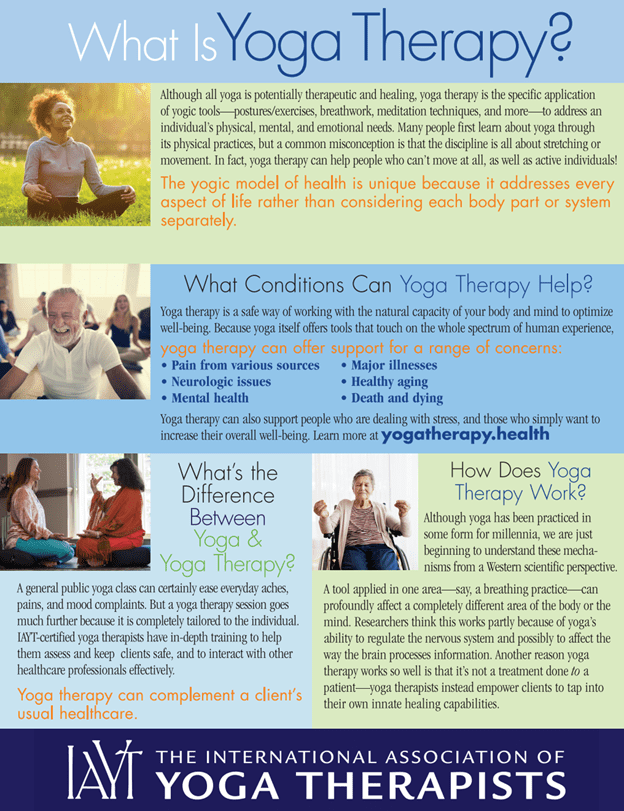
What is Yoga Therapy?
I am often asked what is Yoga Therapy?
The International Association of Yoga Therapists (IAYT) defines Yoga Therapy as “the professional application of the principles and practices of yoga to promote health and well-being within a therapeutic relationship that includes personalized assessment, goal setting, lifestyle management, and yoga practices for individuals or small groups.”
“the process of empowering individuals to progress toward improved health and well-being through the application of the teachings and practices of Yoga.”
I describe Yoga Therapy as a holistic journey of self discovery and a path to overall wellbeing. Using the teachings of Yoga and Ayurveda to reconnect our body and mind, rediscovering the spirit within us bringing us back to wholeness and contentment with our true self and current state. A Yoga Therapist empowers and supports individuals through their unique journey, focusing on the specific goals of the individual and looking at the body, mind, and spirit as one whole entity.
Here is a comparison of what you might see in a Therapeutic Yoga Class and Regular Yoga Class. This is a generalization and a regular yoga class can vary depending on the teacher and how much of the entirety they teach of the yoga tradition.
Yoga Therapy Class
- Instructors have minimum RYT-200 hours and 800 hr IAYT accredited yoga therapy training in anatomy, physiology, pathology, yoga philosophy, yoga psychology, meditation, pranayama (breathing practices) , trauma sensitive teaching and more.
- Clients have a specific health issue in common and other yogic practices are explored
- Smaller classes, less participants
- Pace of class is slower and focus is to regulate the nervous system
- Sequences and practice only include 10 -13 movements,
- interoception during movement is always an emphasis
- Sequences include gentle, restorative movements (asana)
- No obvious peak to the class and activating the relaxation response is the focus
- Specific education related to the therapeutic focus are included in each class
Common Studio Class
- Instructors have minimum RYT-200 hour training in a specific yoga style
- Clients are mobile and classes are mostly asana and fitness based, and may not be accessible to all
- Larger classes, more participants
- Pace of class can vary and be much faster and focus often fitness based
- Sequences/practices can include upwards of 20-60 movements (asana),
- interoception may not be cued
- Sequences may include high risk movements (asana)
- The peak of the class is a physically challenging pose
- Education of some yoga techniques or benefits may not be offered
Yoga Therapists also work alongside a multidisciplinary team, such as your doctor, chiropractor, physiotherapist, psychologist, and more to ensure you are receiving complete support and care along your journey.
More questions, visit the International Association of Yoga Therapists at https://www.iayt.org/ or let’s connect to discuss more.
Testimonial
I cannot thank Christina enough for her classes, they are the highlight of my week and each time I cannot wait for the next. She has been a fantastic teacher; correctly demonstrating poses, helping me to create a flow in my movements and patiently helping correct my posture in the poses so I do not strain my body. I have found her classes to have a perfect mix of strength building, flexibility and relaxation. Christina has a calm demeanor and soft voice that helps to focus and guide you through the practice. And I have especially appreciated that she takes time before class to check in with your state of mind and to see if there are any areas of the body that are bothering you. She will adapt or suggest modifications to help to properly exercise these areas, which really makes the classes more personable and feel tailored to you. I highly recommend Christina’s classes to anyone looking to start or expand their yoga journey.
Anonymous
 Your Discovery and Journey - Yoga Therapy & Wellness
Leave a comment